
- published: 23 Jun 2023
- views: 233203

Option (finance)
In finance, an option is a contract which gives the buyer (the owner or holder) the right, but not the obligation, to buy or sell an underlying asset or instrument at a specified strike price on or before a specified date, depending on the form of the option. The strike price may be set by reference to the spot price (market price) of the underlying security or commodity on the day an option is taken out, or it may be fixed at a discount or at a premium. The seller has the corresponding obligation to fulfill the transaction – to sell or buy – if the buyer (owner) "exercises" the option. An option that conveys to the owner the right to buy at a specific price is referred to as a call; an option that conveys the right of the owner to sell at a specific price is referred to as a put. Both are commonly traded, but the call option is more frequently discussed.
The seller may grant an option to a buyer as part of another transaction, such as a share issue or as part of an employee incentive scheme, otherwise a buyer would pay a premium to the seller for the option. A call option would normally be exercised only when the strike price is below the market value of the underlying asset, while a put option would normally be exercised only when the strike price is above the market value. When an option is exercised, the cost to the buyer of the asset acquired is the strike price plus the premium, if any. When the option expiration date passes without the option being exercised, then the option expires and the buyer would forfeit the premium to the seller. In any case, the premium is income to the seller, and normally a capital loss to the buyer.
This page contains text from Wikipedia, the Free Encyclopedia - https://wn.com/Option_(finance)
Podcasts:
-

Call Options Explained: Options Trading For Beginners
For Exclusive Content on Stocks and Cryptos, please visit our website: https://clearvalueinvesting.com/ GET 3 FREE STOCKS when you open up a stock account here: https://a.webull.com/i/ClearValueTax Join this channel to support us by being a member: https://www.youtube.com/channel/UCigUBIf-zt_DA6xyOQtq2WA/join The best way to support our channel is to share this video on your social media to spread awareness. We appreciate the support! This is our TurboTax Link for your tax preparation needs: https://www.anrdoezrs.net/click-100154634-13906760 ClearValue Tax and affiliates and related parties do not provide tax, legal or accounting advice. This material has been prepared for informational purposes only, and is not intended to provide, and should not be relied on for, tax, legal or acco...
published: 23 Jun 2023 -

Put Options Explained: Options Trading For Beginners
For Exclusive Content on Stocks and Cryptos, please visit our website: https://clearvalueinvesting.com/ GET 3 FREE STOCKS when you open up a stock account here: https://a.webull.com/i/ClearValueTax Options Trading For Beginners Series: Call Options Explained: https://youtu.be/kC28MuQPyu8 Covered Calls Explained: https://youtu.be/D5Rjx_7XG2U Join this channel to support us by being a member: https://www.youtube.com/channel/UCigUBIf-zt_DA6xyOQtq2WA/join The best way to support our channel is to share this video on your social media to spread awareness. We appreciate the support! This is our TurboTax Link for your tax preparation needs: https://www.anrdoezrs.net/click-100154634-13906760 ClearValue Tax and affiliates and related parties do not provide tax, legal or accounting advice. Th...
published: 30 Jul 2023 -
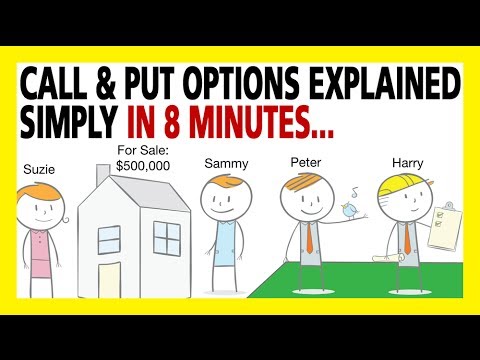
Bill Poulos Presents: Call Options & Put Options Explained In 8 Minutes (Options For Beginners)
Bill Poulos and Profits Run Present: How To Trade Options: Calls & Puts Call options & put options are explained simply in this entertaining and informative 8 minute training video which uses 2 cartoon-based scenarios to help you learn how to trade call options and how to trade put options. If you've ever been confused by calls and puts in the past, this video will clear up any confusion you may have had. Also, if you're looking to learn how to trade options, you will learn some simple options trading strategies in this short video. For more training, get my free "dummies" guide to options trading here: http://www.prtradingresearch.com/simple-options-youtube3
published: 10 Dec 2013 -
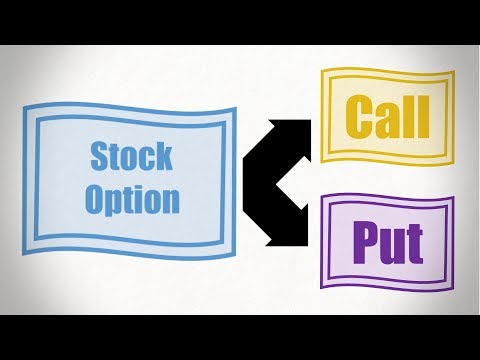
Stock Options Explained
Correction: At 4:20, the graph in the top left-hand corner is slightly off; for total return, the curve should not intercept at (30,0), but rather should be shifted slightly to the left so that the bend in the line occurs at (30,-2). Sorry for the blunder. Option Pricing Factors: - Underlying stock price (higher = higher call premium, lower put premium) - Underlying stock price volatility [expected] (higher = higher option premium) - Underlying stock dividends (higher = lower call premium, higher put premium) - Option's strike price (higher = lower call premium, higher put premium) - Time until expiration (longer = higher option premium) - Interest rates (higher = higher call premium, lower put premium) Intro/Outro Music: https://www.bensound.com/royalty-free-music Episode Music: http://...
published: 31 Aug 2018 -

Call vs Put Options: What’s the Difference?
Investors buy call options on an asset if they believe the stock’s price could rise. On the contrary, investors buy put options if they believe the stock’s price could fall. These are attractive contracts because you can profit from movement in the stock’s price without actually owning the stock. About SoFi: A finance company that can help you get ahead. Get Your Money Right® with SoFi. Connect with SoFi: Subscribe to SoFi on YouTube: https://www.youtube.com/channel/UCuoYE0bfkZCwaspBVQ59jfQ?view_as=subscriber?sub_confirmation=1 Like SoFi on Facebook: https://www.facebook.com/SoFi/ Follow SoFi on Twitter: https://twitter.com/SoFi Follow SoFi on Instagram: https://www.instagram.com/sofi/ Follow SoFi on LinkedIn: https://www.linkedin.com/company/sofi/
published: 23 Sep 2022 -

Options Trading for Beginners (WITH DETAILED EXAMPLES)
In this video, I'm going to explain calls and puts. I'll explain what they are and how they work, plus show you lots of examples so you can really understand. By the end of this video you will have a solid understanding of what is a call option, and what is a put option and what to do with them. ***ATTENTION: I have a new Instagram and TikTok handle @itsrosehan *** That's my official account, and I will NEVER message you about investment schemes, so please be careful and block & report any scammers posing as me. TIMESTAMPS: 0:01:20 - Difference between stocks vs. options 0:08:40 - How a call option works 0:10:28 - What happens to the BUYER of a call option if stock goes UP (in-the-money) 0:12:10 - What happens to the SELLER of a call option if stock goes UP (in-the-money) 0:13:38 - What...
published: 01 Jul 2021 -
Options Trading For Beginners | Step By Step
Learn how to trade options with this step by step guide for beginners ► Pandrea Finance: https://youtube.com/channel/UC-CzhNGkD-V6Zl1Yp14OpDg ► Get up to a $250 in Digital Currency: https://blockfi.com/andrei ► Where I Buy Bitcoin: https://gemini.sjv.io/1E3dz ► My Stock Portfolio + Stock Tracker: https://www.patreon.com/andreijikh ► Get 2 FREE stocks valued up to $1850 (when you deposit $100): https://act.webull.com/kol-us/share.html?hl=en&inviteCode=QhhB1aDNwEDP ► MY DISCORD: https://discord.gg/9TVPxj73Bb ► Open A Roth IRA: https://m1finance.8bxp97.net/c/1980551/696710/10646 ► Follow Me On Instagram: https://www.instagram.com/andreijikh/ ► How I Protect My Bitcoin: https://shop.ledger.com/pages/ledger-nano-x?r=535643c13ab0 My PO Box: Andrei Jikh 4132 S. Rainbow Blvd # 270 Las Vegas, NV ...
published: 06 Aug 2021 -

Options Trading for Beginners in 10 Minutes (Learn the Basics FAST)
Beginner options trader? Learn the essential options trading concepts in 10 minutes with this crash course video. ✅ Beginner options trader? Master the essential options trading concepts with the FREE Options Trading for Beginners PDF: https://geni.us/options-trading-pdf ==== Chapters ==== 0:00 Intro 0:34 What Are Options? 2:11 The Option Contract Multiplier 4:57 100+ Page Options Trading for Beginners PDF 5:22 Put Options Explained 7:24 Understanding Option Prices 11:15 Risks Involved 12:10 Watch This Video Next 🔥 Learn data-driven options strategies to improve your odds of making money long-term with options: https://geni.us/options-course 💻 Trade Options with tastytrade (Up to $3,000 Funding Bonus): https://geni.us/tastytrade 💻 Maximize your trading with TrendSpider's advanced char...
published: 10 Aug 2023 -

A Potential Income Strategy with S&P 500 Index Options | Trading Covered Calls & Short Puts
Trading Covered Calls & Short Puts | Michael Fairbourn | 4-15-24 Characteristics and Risks of Standardized Options. https://bit.ly/2v9tH6D Within this presentation, we initially looked at the trends and potential support and resistance levels of the S&P 500 Index. Next, we looked at the recent trend of the volatility index (VIX). We then discussed many of the characteristics of selling puts on S&P 500 Index options and how traders may potentially use them to generate income. We then placed a sample short put vertical trade, discussing potential gains, risks and some of the option greeks in the thinkorswim paperMoney platform. Looking for income, but frustrated by low dividend offerings? Your education coach will discuss how and when stock investors might employ covered calls in their ...
published: 16 Apr 2024 -

Options Trading: Understanding Option Prices
📣 FREE OPTIONS TRADING MASTERCLASS | https://skyviewtrading.co/3q73nLD Options are priced based on three elements of the underlying stock. 1. Time 2. Price 3. Volatility Watch this video to fully understand each of these three elements that make up option prices. ☁️ Visit Our Site: https://skyviewtrading.com 🔔 Subscribe to our Channel: https://bit.ly/3BPWDC9 📈 Our Preferred Broker: https://bit.ly/3DZax6E #OptionPrices #HowToPriceOptions #OptionBasics what are options option pricing how to trade options option trading basics options explanation stock options
published: 28 Apr 2015
developed with YouTube
13:02
Call Options Explained: Options Trading For Beginners
- Order: Reorder
- Duration: 13:02
- Uploaded Date: 23 Jun 2023
- views: 233203
For Exclusive Content on Stocks and Cryptos, please visit our website: https://clearvalueinvesting.com/
GET 3 FREE STOCKS when you open up a stock account here...
For Exclusive Content on Stocks and Cryptos, please visit our website: https://clearvalueinvesting.com/
GET 3 FREE STOCKS when you open up a stock account here: https://a.webull.com/i/ClearValueTax
Join this channel to support us by being a member:
https://www.youtube.com/channel/UCigUBIf-zt_DA6xyOQtq2WA/join
The best way to support our channel is to share this video on your social media to spread awareness. We appreciate the support!
This is our TurboTax Link for your tax preparation needs:
https://www.anrdoezrs.net/click-100154634-13906760
ClearValue Tax and affiliates and related parties do not provide tax, legal or accounting advice. This material has been prepared for informational purposes only, and is not intended to provide, and should not be relied on for, tax, legal or accounting advice. You should consult your own tax, legal and accounting advisors before engaging in any transaction.
This post may contain affiliate links that at no additional cost to you, I may earn a small commission. Thank you for your support!
Legal Disclosure: I’m not a financial advisor. The information contained in this video is for entertainment purposes only. Before investing, please consult a licensed professional. Any stock purchases I show on video should not be considered “investment recommendations”. I shall not be held liable for any losses you may incur for investing and trading in the stock market in attempt to mirror what I do. Unless investments are FDIC insured, they may decline in value and/or disappear entirely. Please be careful!
https://wn.com/Call_Options_Explained_Options_Trading_For_Beginners
For Exclusive Content on Stocks and Cryptos, please visit our website: https://clearvalueinvesting.com/
GET 3 FREE STOCKS when you open up a stock account here: https://a.webull.com/i/ClearValueTax
Join this channel to support us by being a member:
https://www.youtube.com/channel/UCigUBIf-zt_DA6xyOQtq2WA/join
The best way to support our channel is to share this video on your social media to spread awareness. We appreciate the support!
This is our TurboTax Link for your tax preparation needs:
https://www.anrdoezrs.net/click-100154634-13906760
ClearValue Tax and affiliates and related parties do not provide tax, legal or accounting advice. This material has been prepared for informational purposes only, and is not intended to provide, and should not be relied on for, tax, legal or accounting advice. You should consult your own tax, legal and accounting advisors before engaging in any transaction.
This post may contain affiliate links that at no additional cost to you, I may earn a small commission. Thank you for your support!
Legal Disclosure: I’m not a financial advisor. The information contained in this video is for entertainment purposes only. Before investing, please consult a licensed professional. Any stock purchases I show on video should not be considered “investment recommendations”. I shall not be held liable for any losses you may incur for investing and trading in the stock market in attempt to mirror what I do. Unless investments are FDIC insured, they may decline in value and/or disappear entirely. Please be careful!
9:54
Put Options Explained: Options Trading For Beginners
- Order: Reorder
- Duration: 9:54
- Uploaded Date: 30 Jul 2023
- views: 202236
For Exclusive Content on Stocks and Cryptos, please visit our website: https://clearvalueinvesting.com/
GET 3 FREE STOCKS when you open up a stock account here...
For Exclusive Content on Stocks and Cryptos, please visit our website: https://clearvalueinvesting.com/
GET 3 FREE STOCKS when you open up a stock account here: https://a.webull.com/i/ClearValueTax
Options Trading For Beginners Series:
Call Options Explained: https://youtu.be/kC28MuQPyu8
Covered Calls Explained: https://youtu.be/D5Rjx_7XG2U
Join this channel to support us by being a member:
https://www.youtube.com/channel/UCigUBIf-zt_DA6xyOQtq2WA/join
The best way to support our channel is to share this video on your social media to spread awareness. We appreciate the support!
This is our TurboTax Link for your tax preparation needs:
https://www.anrdoezrs.net/click-100154634-13906760
ClearValue Tax and affiliates and related parties do not provide tax, legal or accounting advice. This material has been prepared for informational purposes only, and is not intended to provide, and should not be relied on for, tax, legal or accounting advice. You should consult your own tax, legal and accounting advisors before engaging in any transaction.
This post may contain affiliate links that at no additional cost to you, I may earn a small commission. Thank you for your support!
Legal Disclosure: I’m not a financial advisor. The information contained in this video is for entertainment purposes only. Before investing, please consult a licensed professional. Any stock purchases I show on video should not be considered “investment recommendations”. I shall not be held liable for any losses you may incur for investing and trading in the stock market in attempt to mirror what I do. Unless investments are FDIC insured, they may decline in value and/or disappear entirely. Please be careful!
https://wn.com/Put_Options_Explained_Options_Trading_For_Beginners
For Exclusive Content on Stocks and Cryptos, please visit our website: https://clearvalueinvesting.com/
GET 3 FREE STOCKS when you open up a stock account here: https://a.webull.com/i/ClearValueTax
Options Trading For Beginners Series:
Call Options Explained: https://youtu.be/kC28MuQPyu8
Covered Calls Explained: https://youtu.be/D5Rjx_7XG2U
Join this channel to support us by being a member:
https://www.youtube.com/channel/UCigUBIf-zt_DA6xyOQtq2WA/join
The best way to support our channel is to share this video on your social media to spread awareness. We appreciate the support!
This is our TurboTax Link for your tax preparation needs:
https://www.anrdoezrs.net/click-100154634-13906760
ClearValue Tax and affiliates and related parties do not provide tax, legal or accounting advice. This material has been prepared for informational purposes only, and is not intended to provide, and should not be relied on for, tax, legal or accounting advice. You should consult your own tax, legal and accounting advisors before engaging in any transaction.
This post may contain affiliate links that at no additional cost to you, I may earn a small commission. Thank you for your support!
Legal Disclosure: I’m not a financial advisor. The information contained in this video is for entertainment purposes only. Before investing, please consult a licensed professional. Any stock purchases I show on video should not be considered “investment recommendations”. I shall not be held liable for any losses you may incur for investing and trading in the stock market in attempt to mirror what I do. Unless investments are FDIC insured, they may decline in value and/or disappear entirely. Please be careful!
- published: 30 Jul 2023
- views: 202236
7:56
Bill Poulos Presents: Call Options & Put Options Explained In 8 Minutes (Options For Beginners)
- Order: Reorder
- Duration: 7:56
- Uploaded Date: 10 Dec 2013
- views: 3196234
Bill Poulos and Profits Run Present:
How To Trade Options: Calls & Puts
Call options & put options are explained simply in this entertaining and informative 8...
Bill Poulos and Profits Run Present:
How To Trade Options: Calls & Puts
Call options & put options are explained simply in this entertaining and informative 8 minute training video which uses 2 cartoon-based scenarios to help you learn how to trade call options and how to trade put options.
If you've ever been confused by calls and puts in the past, this video will clear up any confusion you may have had.
Also, if you're looking to learn how to trade options, you will learn some simple options trading strategies in this short video.
For more training, get my free "dummies" guide to options trading here:
http://www.prtradingresearch.com/simple-options-youtube3
https://wn.com/Bill_Poulos_Presents_Call_Options_Put_Options_Explained_In_8_Minutes_(Options_For_Beginners)
Bill Poulos and Profits Run Present:
How To Trade Options: Calls & Puts
Call options & put options are explained simply in this entertaining and informative 8 minute training video which uses 2 cartoon-based scenarios to help you learn how to trade call options and how to trade put options.
If you've ever been confused by calls and puts in the past, this video will clear up any confusion you may have had.
Also, if you're looking to learn how to trade options, you will learn some simple options trading strategies in this short video.
For more training, get my free "dummies" guide to options trading here:
http://www.prtradingresearch.com/simple-options-youtube3
- published: 10 Dec 2013
- views: 3196234
10:16
Stock Options Explained
- Order: Reorder
- Duration: 10:16
- Uploaded Date: 31 Aug 2018
- views: 1316032
Correction: At 4:20, the graph in the top left-hand corner is slightly off; for total return, the curve should not intercept at (30,0), but rather should be shi...
Correction: At 4:20, the graph in the top left-hand corner is slightly off; for total return, the curve should not intercept at (30,0), but rather should be shifted slightly to the left so that the bend in the line occurs at (30,-2). Sorry for the blunder.
Option Pricing Factors:
- Underlying stock price (higher = higher call premium, lower put premium)
- Underlying stock price volatility [expected] (higher = higher option premium)
- Underlying stock dividends (higher = lower call premium, higher put premium)
- Option's strike price (higher = lower call premium, higher put premium)
- Time until expiration (longer = higher option premium)
- Interest rates (higher = higher call premium, lower put premium)
Intro/Outro Music: https://www.bensound.com/royalty-free-music
Episode Music: http://freemusicarchive.org/music/Podington_Bear/
DISCLAIMER:
This channel is for education purposes only and is not affiliated with any financial institution. Richard Coffin is not registered to provide investment advice and as such does not provide recommendations on The Plain Bagel - those looking for investment advice should seek out a registered professional. Richard is not responsible for investment actions taken by viewers.
https://wn.com/Stock_Options_Explained
Correction: At 4:20, the graph in the top left-hand corner is slightly off; for total return, the curve should not intercept at (30,0), but rather should be shifted slightly to the left so that the bend in the line occurs at (30,-2). Sorry for the blunder.
Option Pricing Factors:
- Underlying stock price (higher = higher call premium, lower put premium)
- Underlying stock price volatility [expected] (higher = higher option premium)
- Underlying stock dividends (higher = lower call premium, higher put premium)
- Option's strike price (higher = lower call premium, higher put premium)
- Time until expiration (longer = higher option premium)
- Interest rates (higher = higher call premium, lower put premium)
Intro/Outro Music: https://www.bensound.com/royalty-free-music
Episode Music: http://freemusicarchive.org/music/Podington_Bear/
DISCLAIMER:
This channel is for education purposes only and is not affiliated with any financial institution. Richard Coffin is not registered to provide investment advice and as such does not provide recommendations on The Plain Bagel - those looking for investment advice should seek out a registered professional. Richard is not responsible for investment actions taken by viewers.
- published: 31 Aug 2018
- views: 1316032
2:14
Call vs Put Options: What’s the Difference?
- Order: Reorder
- Duration: 2:14
- Uploaded Date: 23 Sep 2022
- views: 28764
Investors buy call options on an asset if they believe the stock’s price could rise. On the contrary, investors buy put options if they believe the stock’s pric...
Investors buy call options on an asset if they believe the stock’s price could rise. On the contrary, investors buy put options if they believe the stock’s price could fall. These are attractive contracts because you can profit from movement in the stock’s price without actually owning the stock.
About SoFi:
A finance company that can help you get ahead. Get Your Money Right® with SoFi.
Connect with SoFi:
Subscribe to SoFi on YouTube: https://www.youtube.com/channel/UCuoYE0bfkZCwaspBVQ59jfQ?view_as=subscriber?sub_confirmation=1
Like SoFi on Facebook: https://www.facebook.com/SoFi/
Follow SoFi on Twitter: https://twitter.com/SoFi
Follow SoFi on Instagram: https://www.instagram.com/sofi/
Follow SoFi on LinkedIn: https://www.linkedin.com/company/sofi/
https://wn.com/Call_Vs_Put_Options_What’S_The_Difference
Investors buy call options on an asset if they believe the stock’s price could rise. On the contrary, investors buy put options if they believe the stock’s price could fall. These are attractive contracts because you can profit from movement in the stock’s price without actually owning the stock.
About SoFi:
A finance company that can help you get ahead. Get Your Money Right® with SoFi.
Connect with SoFi:
Subscribe to SoFi on YouTube: https://www.youtube.com/channel/UCuoYE0bfkZCwaspBVQ59jfQ?view_as=subscriber?sub_confirmation=1
Like SoFi on Facebook: https://www.facebook.com/SoFi/
Follow SoFi on Twitter: https://twitter.com/SoFi
Follow SoFi on Instagram: https://www.instagram.com/sofi/
Follow SoFi on LinkedIn: https://www.linkedin.com/company/sofi/
- published: 23 Sep 2022
- views: 28764
27:07
Options Trading for Beginners (WITH DETAILED EXAMPLES)
- Order: Reorder
- Duration: 27:07
- Uploaded Date: 01 Jul 2021
- views: 1124589
In this video, I'm going to explain calls and puts. I'll explain what they are and how they work, plus show you lots of examples so you can really understand. B...
In this video, I'm going to explain calls and puts. I'll explain what they are and how they work, plus show you lots of examples so you can really understand. By the end of this video you will have a solid understanding of what is a call option, and what is a put option and what to do with them.
***ATTENTION: I have a new Instagram and TikTok handle @itsrosehan ***
That's my official account, and I will NEVER message you about investment schemes, so please be careful and block & report any scammers posing as me.
TIMESTAMPS:
0:01:20 - Difference between stocks vs. options
0:08:40 - How a call option works
0:10:28 - What happens to the BUYER of a call option if stock goes UP (in-the-money)
0:12:10 - What happens to the SELLER of a call option if stock goes UP (in-the-money)
0:13:38 - What happens to the BUYER of a call option if stock goes DOWN (out-of-the-money)
0:14:35 - What happens to the SELLER of a call option if stock goes DOWN (out-of-the-money)
0:16:13 - How a put option works
0:17:38 - What happens to the BUYER of a put option if stock goes DOWN (in-the-money)
0:19:30 - What happens to the SELLER of a put option if stock goes DOWN (in-the-money)
0:20:48 - What happens to the BUYER of a put option if stock goes UP (out-of-the-money)
0:21:23 - What happens to the SELLER of a put option if stock goes UP (out-of-the-money)
0:22:43 - Summary of calls vs. puts
0:24:18 - The contract multiplier
0:23:20 - How to buy/sell options (the options chain)
0:25:15 - Summary & review
__________
***THINGS MENTIONED IN THIS VIDEO! 👀***
💫 My $400/Day Side Hustle
https://youtu.be/anxHLZM-eIU
__________
***BOOKS I RECOMMEND 📚***
I Will Teach You to Be Rich (hilarious how-to book on personal finance for millennials)
https://amzn.to/2VbJ1Pt
The Little Book of Common Sense Investing (Jack Bogle's classic advice on index funds)
https://amzn.to/32ewzjj
InvestED (step-by-step, millennial-friendly advice on how to pick stocks like Warren Buffett)
https://amzn.to/2SLTYpn
Unshakeable (this book = courage. blast ALL the fears & misconceptions you have about investing)
https://amzn.to/2SKyklt
Rich Dad Poor Dad (#1 selling personal finance book of all time... need I say more?)
https://amzn.to/2SJ6vtx
Think and Grow Rich (the ultimate book on money mindset and wealth consciousness)
https://amzn.to/37N2adc
________
***MY FAVORITE MONEY TOOLS 🖤***
YNAB (I literally can't live without this budgeting app, so obsessed)
https://www.youneedabudget.com/?ref=YkZbz4082iUstrX7&utm_source=customer_referral
Wise (like Venmo but for international currencies - I use this app a LOT for my life in Mexico)
https://wise.prf.hn/l/413jE0q
Ledger Nano S (crypto storage hardware wallet, because "Not Your Keys, Not Your Crypto"!):
https://amzn.to/3Ne37jy
__________
DISCLAIMERS & DISCLOSURES ❤
This content is for education and entertainment purposes only. Rose does not provide tax or investment advice. The information is being presented without consideration of the investment objectives, risk tolerance, or financial circumstances of any specific investor and might not be suitable for all investors. Past performance is not indicative of future results. All investing involves risk, including the possible loss of principal.
This description contains affiliate links that allow you to find the items mentioned in this video and support the channel at no cost to you. Investing With Rose is a participant in the Amazon Services LLC Associates Program, an affiliate advertising program designed to provide a means for sites to earn advertising fees by advertising and linking to www.amazon.com. Thank you for your support!
__________
SAY HI ON SOCIAL! 👋🏼
Website: https://www.rosehan.com
Instagram: http://instagram.com/itsrosehan
TikTok: https://www.tiktok.com/@itsrosehan
Pinterest: https://pinterest.com/itsrosehan
https://youtu.be/TyZsemV_0YA
https://wn.com/Options_Trading_For_Beginners_(With_Detailed_Examples)
In this video, I'm going to explain calls and puts. I'll explain what they are and how they work, plus show you lots of examples so you can really understand. By the end of this video you will have a solid understanding of what is a call option, and what is a put option and what to do with them.
***ATTENTION: I have a new Instagram and TikTok handle @itsrosehan ***
That's my official account, and I will NEVER message you about investment schemes, so please be careful and block & report any scammers posing as me.
TIMESTAMPS:
0:01:20 - Difference between stocks vs. options
0:08:40 - How a call option works
0:10:28 - What happens to the BUYER of a call option if stock goes UP (in-the-money)
0:12:10 - What happens to the SELLER of a call option if stock goes UP (in-the-money)
0:13:38 - What happens to the BUYER of a call option if stock goes DOWN (out-of-the-money)
0:14:35 - What happens to the SELLER of a call option if stock goes DOWN (out-of-the-money)
0:16:13 - How a put option works
0:17:38 - What happens to the BUYER of a put option if stock goes DOWN (in-the-money)
0:19:30 - What happens to the SELLER of a put option if stock goes DOWN (in-the-money)
0:20:48 - What happens to the BUYER of a put option if stock goes UP (out-of-the-money)
0:21:23 - What happens to the SELLER of a put option if stock goes UP (out-of-the-money)
0:22:43 - Summary of calls vs. puts
0:24:18 - The contract multiplier
0:23:20 - How to buy/sell options (the options chain)
0:25:15 - Summary & review
__________
***THINGS MENTIONED IN THIS VIDEO! 👀***
💫 My $400/Day Side Hustle
https://youtu.be/anxHLZM-eIU
__________
***BOOKS I RECOMMEND 📚***
I Will Teach You to Be Rich (hilarious how-to book on personal finance for millennials)
https://amzn.to/2VbJ1Pt
The Little Book of Common Sense Investing (Jack Bogle's classic advice on index funds)
https://amzn.to/32ewzjj
InvestED (step-by-step, millennial-friendly advice on how to pick stocks like Warren Buffett)
https://amzn.to/2SLTYpn
Unshakeable (this book = courage. blast ALL the fears & misconceptions you have about investing)
https://amzn.to/2SKyklt
Rich Dad Poor Dad (#1 selling personal finance book of all time... need I say more?)
https://amzn.to/2SJ6vtx
Think and Grow Rich (the ultimate book on money mindset and wealth consciousness)
https://amzn.to/37N2adc
________
***MY FAVORITE MONEY TOOLS 🖤***
YNAB (I literally can't live without this budgeting app, so obsessed)
https://www.youneedabudget.com/?ref=YkZbz4082iUstrX7&utm_source=customer_referral
Wise (like Venmo but for international currencies - I use this app a LOT for my life in Mexico)
https://wise.prf.hn/l/413jE0q
Ledger Nano S (crypto storage hardware wallet, because "Not Your Keys, Not Your Crypto"!):
https://amzn.to/3Ne37jy
__________
DISCLAIMERS & DISCLOSURES ❤
This content is for education and entertainment purposes only. Rose does not provide tax or investment advice. The information is being presented without consideration of the investment objectives, risk tolerance, or financial circumstances of any specific investor and might not be suitable for all investors. Past performance is not indicative of future results. All investing involves risk, including the possible loss of principal.
This description contains affiliate links that allow you to find the items mentioned in this video and support the channel at no cost to you. Investing With Rose is a participant in the Amazon Services LLC Associates Program, an affiliate advertising program designed to provide a means for sites to earn advertising fees by advertising and linking to www.amazon.com. Thank you for your support!
__________
SAY HI ON SOCIAL! 👋🏼
Website: https://www.rosehan.com
Instagram: http://instagram.com/itsrosehan
TikTok: https://www.tiktok.com/@itsrosehan
Pinterest: https://pinterest.com/itsrosehan
https://youtu.be/TyZsemV_0YA
- published: 01 Jul 2021
- views: 1124589
22:23
Options Trading For Beginners | Step By Step
- Order: Reorder
- Duration: 22:23
- Uploaded Date: 06 Aug 2021
- views: 1428010
Learn how to trade options with this step by step guide for beginners
► Pandrea Finance: https://youtube.com/channel/UC-CzhNGkD-V6Zl1Yp14OpDg
► Get up to a $250...
Learn how to trade options with this step by step guide for beginners
► Pandrea Finance: https://youtube.com/channel/UC-CzhNGkD-V6Zl1Yp14OpDg
► Get up to a $250 in Digital Currency: https://blockfi.com/andrei
► Where I Buy Bitcoin: https://gemini.sjv.io/1E3dz
► My Stock Portfolio + Stock Tracker: https://www.patreon.com/andreijikh
► Get 2 FREE stocks valued up to $1850 (when you deposit $100): https://act.webull.com/kol-us/share.html?hl=en&inviteCode=QhhB1aDNwEDP
► MY DISCORD: https://discord.gg/9TVPxj73Bb
► Open A Roth IRA: https://m1finance.8bxp97.net/c/1980551/696710/10646
► Follow Me On Instagram: https://www.instagram.com/andreijikh/
► How I Protect My Bitcoin: https://shop.ledger.com/pages/ledger-nano-x?r=535643c13ab0
My PO Box:
Andrei Jikh
4132 S. Rainbow Blvd # 270
Las Vegas, NV 89103
Options trading is one of the most popular investing strategies in the world. Options are not for everyone but they can be used safely to make a few extra percentage points per year while remaining safe. Here are 3 top options trading investment strategies for beginners - step by step.
WHAT ARE OPTIONS?
Options are contracts that represent underlying equities like stocks. One option represents control over 100 shares.
HOW ARE OPTIONS DIFFERENT THAN STOCKS?
Options have a lot more "options" than just buying and selling, and unlike stocks, options have an expiration date.
WHY USE OPTIONS?
Options allow you to leverage and get control over more stocks for less money.
3 BASIC FUNDAMENTALS:
There are 3 things to options you have to understand.
1. Strike Price: The potential future value of the underlying stock. This can be either lower or higher than the current equity value (stock price).
2. Expiration Date: The date at which the contract is no longer valid.
3. Premium: the payment made by buyers to sellers of options.
PUTS AND CALLS:
There are only two forms of options - puts and calls. You can buy buy and sell both puts and calls. Here's what that means:
Buying a Call - this is a bullish sentiment (you think the stock is going up) beyond the strike price, before the expiration date. You have the option to buy shares at the strike price on or before that particular date. You pay a premium to buy this option contract.
Buying a Put - this is a bearish sentiment (you think the stock is going down) lower than the strike price before the expiration date. You have the option to sell a stock at the strike price on or before a particular date. You pay a premium to buy this option contract.
Selling a Call - this is the obligation to sell stock at a certain strike price by the expiration date. You make money by collecting a premium when you sell this call option. If the price of the stock does NOT reach the strike price you do NOT have to sell the stock and you keep the premium.
Selling a Put - this is the obligation to buy stock at a certain price by the expiration date. You collect premium for selling this put option. If the stock price does NOT reach the strike price you do not have to buy the stock and you keep the premium.
3 STRATEGIES:
There are 3 simple strategies you can use to make money that are relatively safe (safer than some of the other options you can do with options).
1. Selling Covered Calls
2. Selling Puts
3. LEAPS
If you watch this video all the way through, you'll learn a lot and hopefully make some money. Enjoy, invest, and have fun!
*None of this is meant to be construed as investment advice, it's for entertainment purposes only. Links above include affiliate commission or referrals. I'm part of an affiliate network and I receive compensation from partnering websites. The video is accurate as of the posting date but may not be accurate in the future.
https://wn.com/Options_Trading_For_Beginners_|_Step_By_Step
Learn how to trade options with this step by step guide for beginners
► Pandrea Finance: https://youtube.com/channel/UC-CzhNGkD-V6Zl1Yp14OpDg
► Get up to a $250 in Digital Currency: https://blockfi.com/andrei
► Where I Buy Bitcoin: https://gemini.sjv.io/1E3dz
► My Stock Portfolio + Stock Tracker: https://www.patreon.com/andreijikh
► Get 2 FREE stocks valued up to $1850 (when you deposit $100): https://act.webull.com/kol-us/share.html?hl=en&inviteCode=QhhB1aDNwEDP
► MY DISCORD: https://discord.gg/9TVPxj73Bb
► Open A Roth IRA: https://m1finance.8bxp97.net/c/1980551/696710/10646
► Follow Me On Instagram: https://www.instagram.com/andreijikh/
► How I Protect My Bitcoin: https://shop.ledger.com/pages/ledger-nano-x?r=535643c13ab0
My PO Box:
Andrei Jikh
4132 S. Rainbow Blvd # 270
Las Vegas, NV 89103
Options trading is one of the most popular investing strategies in the world. Options are not for everyone but they can be used safely to make a few extra percentage points per year while remaining safe. Here are 3 top options trading investment strategies for beginners - step by step.
WHAT ARE OPTIONS?
Options are contracts that represent underlying equities like stocks. One option represents control over 100 shares.
HOW ARE OPTIONS DIFFERENT THAN STOCKS?
Options have a lot more "options" than just buying and selling, and unlike stocks, options have an expiration date.
WHY USE OPTIONS?
Options allow you to leverage and get control over more stocks for less money.
3 BASIC FUNDAMENTALS:
There are 3 things to options you have to understand.
1. Strike Price: The potential future value of the underlying stock. This can be either lower or higher than the current equity value (stock price).
2. Expiration Date: The date at which the contract is no longer valid.
3. Premium: the payment made by buyers to sellers of options.
PUTS AND CALLS:
There are only two forms of options - puts and calls. You can buy buy and sell both puts and calls. Here's what that means:
Buying a Call - this is a bullish sentiment (you think the stock is going up) beyond the strike price, before the expiration date. You have the option to buy shares at the strike price on or before that particular date. You pay a premium to buy this option contract.
Buying a Put - this is a bearish sentiment (you think the stock is going down) lower than the strike price before the expiration date. You have the option to sell a stock at the strike price on or before a particular date. You pay a premium to buy this option contract.
Selling a Call - this is the obligation to sell stock at a certain strike price by the expiration date. You make money by collecting a premium when you sell this call option. If the price of the stock does NOT reach the strike price you do NOT have to sell the stock and you keep the premium.
Selling a Put - this is the obligation to buy stock at a certain price by the expiration date. You collect premium for selling this put option. If the stock price does NOT reach the strike price you do not have to buy the stock and you keep the premium.
3 STRATEGIES:
There are 3 simple strategies you can use to make money that are relatively safe (safer than some of the other options you can do with options).
1. Selling Covered Calls
2. Selling Puts
3. LEAPS
If you watch this video all the way through, you'll learn a lot and hopefully make some money. Enjoy, invest, and have fun!
*None of this is meant to be construed as investment advice, it's for entertainment purposes only. Links above include affiliate commission or referrals. I'm part of an affiliate network and I receive compensation from partnering websites. The video is accurate as of the posting date but may not be accurate in the future.
- published: 06 Aug 2021
- views: 1428010
12:28
Options Trading for Beginners in 10 Minutes (Learn the Basics FAST)
- Order: Reorder
- Duration: 12:28
- Uploaded Date: 10 Aug 2023
- views: 152739
Beginner options trader? Learn the essential options trading concepts in 10 minutes with this crash course video.
✅ Beginner options trader? Master the essenti...
Beginner options trader? Learn the essential options trading concepts in 10 minutes with this crash course video.
✅ Beginner options trader? Master the essential options trading concepts with the FREE Options Trading for Beginners PDF: https://geni.us/options-trading-pdf
==== Chapters ====
0:00 Intro
0:34 What Are Options?
2:11 The Option Contract Multiplier
4:57 100+ Page Options Trading for Beginners PDF
5:22 Put Options Explained
7:24 Understanding Option Prices
11:15 Risks Involved
12:10 Watch This Video Next
🔥 Learn data-driven options strategies to improve your odds of making money long-term with options: https://geni.us/options-course
💻 Trade Options with tastytrade (Up to $3,000 Funding Bonus): https://geni.us/tastytrade
💻 Maximize your trading with TrendSpider's advanced charting tools and scanners: https://geni.us/trendspider
=== Recommended Videos ===
➥ Options Trading for Beginners: https://youtu.be/7PM4rNDr4oI
➥ How to Understand Option Prices SIMPLY: https://youtu.be/djYyfQ6Ekkg
➥ Vertical Spreads for Beginners: https://youtu.be/mwttDWfDQ9c
===== Summary =====
In this video, we'll quickly walk through the essential topics you need to understand as a new options trader.
Options are financial contracts that allow the buyer (owner) to buy/sell an underlying asset, like a stock, at a fixed price (the strike price) before a predetermined date (the expiration date).
Call options allow the owner to purchase 100 shares of stock at the strike price before the expiration date. The ability to buy shares at a fixed price gets more valuable as the stock price goes up, and vice versa.
Put options allow the owner to sell/short 100 shares of stock at the strike price before the expiration date. The ability to sell shares at a fixed price gets more valuable as the stock price falls, and vice versa.
Options traders aim to profit from the price changes of option contracts, just like stock traders aim to profit from stock price changes.
But option prices are influenced by a variety of factors, such as the time to expiration, the stock's volatility, and the distance between the stock price and strike price.
Watch the video all the way through to learn these key concepts quickly, and hopefully effectively with the explanations and accompanying visuals.
=======
Disclaimer: Nothing contained in our content constitutes a solicitation, recommendation, promotion, or endorsement of any particular security, other investment product, transaction, or investment. Trading Futures, Options on Futures, and retail off-exchange foreign currency transactions involve substantial risk of loss and are not suitable for all investors. You should carefully consider whether trading is suitable for you in light of your circumstances, knowledge, and financial resources. You may lose all or more of your initial investment. Opinions, market data, and recommendations are subject to change at any time. Past performance is not necessarily indicative of future results. I am not a financial advisor. The ideas presented in this video are for entertainment purposes only. You (and only you) are responsible for the financial decisions that you make.
Disclosure: Some of the links in the video description are affiliate links, which means I receive a small amount of compensation if you sign up for these services using my unique link. If you want to support the channel, it's a great way to say thank you! You can always head directly to the websites mentioned in the videos to avoid giving affiliate credit, but you may miss a signup bonus.
#OptionsTrading
tastytrade, Inc. (“tastytrade”) has entered into a Marketing Agreement with Project Finance(Marketing Agent”) whereby tastytrade pays compensation to Marketing Agent to recommend tastytrade’ brokerage services. The existence of this Marketing Agreement should not be deemed as an endorsement or recommendation of Marketing Agent by tastytrade and/or any of its affiliated companies. Neither tastytrade nor any of its affiliated companies is responsible for the privacy practices of Marketing Agent or this website. tastytrade does not warrant the accuracy or content of the products or services offered by Marketing Agent or this website. Marketing Agent is independent and is not an affiliate of tastytrade.
https://wn.com/Options_Trading_For_Beginners_In_10_Minutes_(Learn_The_Basics_Fast)
Beginner options trader? Learn the essential options trading concepts in 10 minutes with this crash course video.
✅ Beginner options trader? Master the essential options trading concepts with the FREE Options Trading for Beginners PDF: https://geni.us/options-trading-pdf
==== Chapters ====
0:00 Intro
0:34 What Are Options?
2:11 The Option Contract Multiplier
4:57 100+ Page Options Trading for Beginners PDF
5:22 Put Options Explained
7:24 Understanding Option Prices
11:15 Risks Involved
12:10 Watch This Video Next
🔥 Learn data-driven options strategies to improve your odds of making money long-term with options: https://geni.us/options-course
💻 Trade Options with tastytrade (Up to $3,000 Funding Bonus): https://geni.us/tastytrade
💻 Maximize your trading with TrendSpider's advanced charting tools and scanners: https://geni.us/trendspider
=== Recommended Videos ===
➥ Options Trading for Beginners: https://youtu.be/7PM4rNDr4oI
➥ How to Understand Option Prices SIMPLY: https://youtu.be/djYyfQ6Ekkg
➥ Vertical Spreads for Beginners: https://youtu.be/mwttDWfDQ9c
===== Summary =====
In this video, we'll quickly walk through the essential topics you need to understand as a new options trader.
Options are financial contracts that allow the buyer (owner) to buy/sell an underlying asset, like a stock, at a fixed price (the strike price) before a predetermined date (the expiration date).
Call options allow the owner to purchase 100 shares of stock at the strike price before the expiration date. The ability to buy shares at a fixed price gets more valuable as the stock price goes up, and vice versa.
Put options allow the owner to sell/short 100 shares of stock at the strike price before the expiration date. The ability to sell shares at a fixed price gets more valuable as the stock price falls, and vice versa.
Options traders aim to profit from the price changes of option contracts, just like stock traders aim to profit from stock price changes.
But option prices are influenced by a variety of factors, such as the time to expiration, the stock's volatility, and the distance between the stock price and strike price.
Watch the video all the way through to learn these key concepts quickly, and hopefully effectively with the explanations and accompanying visuals.
=======
Disclaimer: Nothing contained in our content constitutes a solicitation, recommendation, promotion, or endorsement of any particular security, other investment product, transaction, or investment. Trading Futures, Options on Futures, and retail off-exchange foreign currency transactions involve substantial risk of loss and are not suitable for all investors. You should carefully consider whether trading is suitable for you in light of your circumstances, knowledge, and financial resources. You may lose all or more of your initial investment. Opinions, market data, and recommendations are subject to change at any time. Past performance is not necessarily indicative of future results. I am not a financial advisor. The ideas presented in this video are for entertainment purposes only. You (and only you) are responsible for the financial decisions that you make.
Disclosure: Some of the links in the video description are affiliate links, which means I receive a small amount of compensation if you sign up for these services using my unique link. If you want to support the channel, it's a great way to say thank you! You can always head directly to the websites mentioned in the videos to avoid giving affiliate credit, but you may miss a signup bonus.
#OptionsTrading
tastytrade, Inc. (“tastytrade”) has entered into a Marketing Agreement with Project Finance(Marketing Agent”) whereby tastytrade pays compensation to Marketing Agent to recommend tastytrade’ brokerage services. The existence of this Marketing Agreement should not be deemed as an endorsement or recommendation of Marketing Agent by tastytrade and/or any of its affiliated companies. Neither tastytrade nor any of its affiliated companies is responsible for the privacy practices of Marketing Agent or this website. tastytrade does not warrant the accuracy or content of the products or services offered by Marketing Agent or this website. Marketing Agent is independent and is not an affiliate of tastytrade.
- published: 10 Aug 2023
- views: 152739
44:41
A Potential Income Strategy with S&P 500 Index Options | Trading Covered Calls & Short Puts
- Order: Reorder
- Duration: 44:41
- Uploaded Date: 16 Apr 2024
- views: 434
Trading Covered Calls & Short Puts | Michael Fairbourn | 4-15-24
Characteristics and Risks of Standardized Options. https://bit.ly/2v9tH6D
Within this presenta...
Trading Covered Calls & Short Puts | Michael Fairbourn | 4-15-24
Characteristics and Risks of Standardized Options. https://bit.ly/2v9tH6D
Within this presentation, we initially looked at the trends and potential support and resistance levels of the S&P 500 Index. Next, we looked at the recent trend of the volatility index (VIX). We then discussed many of the characteristics of selling puts on S&P 500 Index options and how traders may potentially use them to generate income. We then placed a sample short put vertical trade, discussing potential gains, risks and some of the option greeks in the thinkorswim paperMoney platform.
Looking for income, but frustrated by low dividend offerings? Your education coach will discuss how and when stock investors might employ covered calls in their income portfolio. Expect a balanced education on the returns and risks of this popular strategy, and on the tools that can potentially help you implement it.
0823-3902
Options involve risks and are not suitable for all investors. Please read the Characteristics and Risks of Standardized Options carefully before trading.
Scripts are for educational purposes only, are not a recommendation, and are not guaranteed for time or accuracy.
Follow Mike Fairbourn on X: MikeFairbournCS
Dividend Aristocrats 2024: http://tos.mx/!KA3HP4R1
Here's the link to the new Schwab coaching calendar: : https://www.schwab.com/schwab-coaching
Link to the Trader Talks Webcasts from Schwab Coaching on YouTube: https://www.youtube.com/@tradertalkswebcasts/featured
#MichaelFairbourn #TraderTalks #schwabcoaching
#MikeFairbourn
https://wn.com/A_Potential_Income_Strategy_With_S_P_500_Index_Options_|_Trading_Covered_Calls_Short_Puts
Trading Covered Calls & Short Puts | Michael Fairbourn | 4-15-24
Characteristics and Risks of Standardized Options. https://bit.ly/2v9tH6D
Within this presentation, we initially looked at the trends and potential support and resistance levels of the S&P 500 Index. Next, we looked at the recent trend of the volatility index (VIX). We then discussed many of the characteristics of selling puts on S&P 500 Index options and how traders may potentially use them to generate income. We then placed a sample short put vertical trade, discussing potential gains, risks and some of the option greeks in the thinkorswim paperMoney platform.
Looking for income, but frustrated by low dividend offerings? Your education coach will discuss how and when stock investors might employ covered calls in their income portfolio. Expect a balanced education on the returns and risks of this popular strategy, and on the tools that can potentially help you implement it.
0823-3902
Options involve risks and are not suitable for all investors. Please read the Characteristics and Risks of Standardized Options carefully before trading.
Scripts are for educational purposes only, are not a recommendation, and are not guaranteed for time or accuracy.
Follow Mike Fairbourn on X: MikeFairbournCS
Dividend Aristocrats 2024: http://tos.mx/!KA3HP4R1
Here's the link to the new Schwab coaching calendar: : https://www.schwab.com/schwab-coaching
Link to the Trader Talks Webcasts from Schwab Coaching on YouTube: https://www.youtube.com/@tradertalkswebcasts/featured
#MichaelFairbourn #TraderTalks #schwabcoaching
#MikeFairbourn
- published: 16 Apr 2024
- views: 434
7:31
Options Trading: Understanding Option Prices
- Order: Reorder
- Duration: 7:31
- Uploaded Date: 28 Apr 2015
- views: 4788643
📣 FREE OPTIONS TRADING MASTERCLASS | https://skyviewtrading.co/3q73nLD
Options are priced based on three elements of the underlying stock.
1. Time
2. Price
...
📣 FREE OPTIONS TRADING MASTERCLASS | https://skyviewtrading.co/3q73nLD
Options are priced based on three elements of the underlying stock.
1. Time
2. Price
3. Volatility
Watch this video to fully understand each of these three elements that make up option prices.
☁️ Visit Our Site: https://skyviewtrading.com
🔔 Subscribe to our Channel: https://bit.ly/3BPWDC9
📈 Our Preferred Broker: https://bit.ly/3DZax6E
#OptionPrices
#HowToPriceOptions
#OptionBasics
what are options
option pricing
how to trade options
option trading basics
options explanation
stock options
https://wn.com/Options_Trading_Understanding_Option_Prices
📣 FREE OPTIONS TRADING MASTERCLASS | https://skyviewtrading.co/3q73nLD
Options are priced based on three elements of the underlying stock.
1. Time
2. Price
3. Volatility
Watch this video to fully understand each of these three elements that make up option prices.
☁️ Visit Our Site: https://skyviewtrading.com
🔔 Subscribe to our Channel: https://bit.ly/3BPWDC9
📈 Our Preferred Broker: https://bit.ly/3DZax6E
#OptionPrices
#HowToPriceOptions
#OptionBasics
what are options
option pricing
how to trade options
option trading basics
options explanation
stock options
- published: 28 Apr 2015
- views: 4788643

13:02
Call Options Explained: Options Trading For Beginners
For Exclusive Content on Stocks and Cryptos, please visit our website: https://clearvaluei...
published: 23 Jun 2023
Call Options Explained: Options Trading For Beginners
Call Options Explained: Options Trading For Beginners
- Report rights infringement
- published: 23 Jun 2023
- views: 233203
For Exclusive Content on Stocks and Cryptos, please visit our website: https://clearvalueinvesting.com/
GET 3 FREE STOCKS when you open up a stock account here: https://a.webull.com/i/ClearValueTax
Join this channel to support us by being a member:
https://www.youtube.com/channel/UCigUBIf-zt_DA6xyOQtq2WA/join
The best way to support our channel is to share this video on your social media to spread awareness. We appreciate the support!
This is our TurboTax Link for your tax preparation needs:
https://www.anrdoezrs.net/click-100154634-13906760
ClearValue Tax and affiliates and related parties do not provide tax, legal or accounting advice. This material has been prepared for informational purposes only, and is not intended to provide, and should not be relied on for, tax, legal or accounting advice. You should consult your own tax, legal and accounting advisors before engaging in any transaction.
This post may contain affiliate links that at no additional cost to you, I may earn a small commission. Thank you for your support!
Legal Disclosure: I’m not a financial advisor. The information contained in this video is for entertainment purposes only. Before investing, please consult a licensed professional. Any stock purchases I show on video should not be considered “investment recommendations”. I shall not be held liable for any losses you may incur for investing and trading in the stock market in attempt to mirror what I do. Unless investments are FDIC insured, they may decline in value and/or disappear entirely. Please be careful!
9:54
Put Options Explained: Options Trading For Beginners
For Exclusive Content on Stocks and Cryptos, please visit our website: https://clearvaluei...
published: 30 Jul 2023
Put Options Explained: Options Trading For Beginners
Put Options Explained: Options Trading For Beginners
- Report rights infringement
- published: 30 Jul 2023
- views: 202236
For Exclusive Content on Stocks and Cryptos, please visit our website: https://clearvalueinvesting.com/
GET 3 FREE STOCKS when you open up a stock account here: https://a.webull.com/i/ClearValueTax
Options Trading For Beginners Series:
Call Options Explained: https://youtu.be/kC28MuQPyu8
Covered Calls Explained: https://youtu.be/D5Rjx_7XG2U
Join this channel to support us by being a member:
https://www.youtube.com/channel/UCigUBIf-zt_DA6xyOQtq2WA/join
The best way to support our channel is to share this video on your social media to spread awareness. We appreciate the support!
This is our TurboTax Link for your tax preparation needs:
https://www.anrdoezrs.net/click-100154634-13906760
ClearValue Tax and affiliates and related parties do not provide tax, legal or accounting advice. This material has been prepared for informational purposes only, and is not intended to provide, and should not be relied on for, tax, legal or accounting advice. You should consult your own tax, legal and accounting advisors before engaging in any transaction.
This post may contain affiliate links that at no additional cost to you, I may earn a small commission. Thank you for your support!
Legal Disclosure: I’m not a financial advisor. The information contained in this video is for entertainment purposes only. Before investing, please consult a licensed professional. Any stock purchases I show on video should not be considered “investment recommendations”. I shall not be held liable for any losses you may incur for investing and trading in the stock market in attempt to mirror what I do. Unless investments are FDIC insured, they may decline in value and/or disappear entirely. Please be careful!
7:56
Bill Poulos Presents: Call Options & Put Options Explained In 8 Minutes (Options For Beginners)
Bill Poulos and Profits Run Present:
How To Trade Options: Calls & Puts
Call options & p...
published: 10 Dec 2013
Bill Poulos Presents: Call Options & Put Options Explained In 8 Minutes (Options For Beginners)
Bill Poulos Presents: Call Options & Put Options Explained In 8 Minutes (Options For Beginners)
- Report rights infringement
- published: 10 Dec 2013
- views: 3196234
Bill Poulos and Profits Run Present:
How To Trade Options: Calls & Puts
Call options & put options are explained simply in this entertaining and informative 8 minute training video which uses 2 cartoon-based scenarios to help you learn how to trade call options and how to trade put options.
If you've ever been confused by calls and puts in the past, this video will clear up any confusion you may have had.
Also, if you're looking to learn how to trade options, you will learn some simple options trading strategies in this short video.
For more training, get my free "dummies" guide to options trading here:
http://www.prtradingresearch.com/simple-options-youtube3
10:16
Stock Options Explained
Correction: At 4:20, the graph in the top left-hand corner is slightly off; for total retu...
published: 31 Aug 2018
Stock Options Explained
Stock Options Explained
- Report rights infringement
- published: 31 Aug 2018
- views: 1316032
Correction: At 4:20, the graph in the top left-hand corner is slightly off; for total return, the curve should not intercept at (30,0), but rather should be shifted slightly to the left so that the bend in the line occurs at (30,-2). Sorry for the blunder.
Option Pricing Factors:
- Underlying stock price (higher = higher call premium, lower put premium)
- Underlying stock price volatility [expected] (higher = higher option premium)
- Underlying stock dividends (higher = lower call premium, higher put premium)
- Option's strike price (higher = lower call premium, higher put premium)
- Time until expiration (longer = higher option premium)
- Interest rates (higher = higher call premium, lower put premium)
Intro/Outro Music: https://www.bensound.com/royalty-free-music
Episode Music: http://freemusicarchive.org/music/Podington_Bear/
DISCLAIMER:
This channel is for education purposes only and is not affiliated with any financial institution. Richard Coffin is not registered to provide investment advice and as such does not provide recommendations on The Plain Bagel - those looking for investment advice should seek out a registered professional. Richard is not responsible for investment actions taken by viewers.
2:14
Call vs Put Options: What’s the Difference?
Investors buy call options on an asset if they believe the stock’s price could rise. On th...
published: 23 Sep 2022
Call vs Put Options: What’s the Difference?
Call vs Put Options: What’s the Difference?
- Report rights infringement
- published: 23 Sep 2022
- views: 28764
Investors buy call options on an asset if they believe the stock’s price could rise. On the contrary, investors buy put options if they believe the stock’s price could fall. These are attractive contracts because you can profit from movement in the stock’s price without actually owning the stock.
About SoFi:
A finance company that can help you get ahead. Get Your Money Right® with SoFi.
Connect with SoFi:
Subscribe to SoFi on YouTube: https://www.youtube.com/channel/UCuoYE0bfkZCwaspBVQ59jfQ?view_as=subscriber?sub_confirmation=1
Like SoFi on Facebook: https://www.facebook.com/SoFi/
Follow SoFi on Twitter: https://twitter.com/SoFi
Follow SoFi on Instagram: https://www.instagram.com/sofi/
Follow SoFi on LinkedIn: https://www.linkedin.com/company/sofi/
27:07
Options Trading for Beginners (WITH DETAILED EXAMPLES)
In this video, I'm going to explain calls and puts. I'll explain what they are and how the...
published: 01 Jul 2021
Options Trading for Beginners (WITH DETAILED EXAMPLES)
Options Trading for Beginners (WITH DETAILED EXAMPLES)
- Report rights infringement
- published: 01 Jul 2021
- views: 1124589
In this video, I'm going to explain calls and puts. I'll explain what they are and how they work, plus show you lots of examples so you can really understand. By the end of this video you will have a solid understanding of what is a call option, and what is a put option and what to do with them.
***ATTENTION: I have a new Instagram and TikTok handle @itsrosehan ***
That's my official account, and I will NEVER message you about investment schemes, so please be careful and block & report any scammers posing as me.
TIMESTAMPS:
0:01:20 - Difference between stocks vs. options
0:08:40 - How a call option works
0:10:28 - What happens to the BUYER of a call option if stock goes UP (in-the-money)
0:12:10 - What happens to the SELLER of a call option if stock goes UP (in-the-money)
0:13:38 - What happens to the BUYER of a call option if stock goes DOWN (out-of-the-money)
0:14:35 - What happens to the SELLER of a call option if stock goes DOWN (out-of-the-money)
0:16:13 - How a put option works
0:17:38 - What happens to the BUYER of a put option if stock goes DOWN (in-the-money)
0:19:30 - What happens to the SELLER of a put option if stock goes DOWN (in-the-money)
0:20:48 - What happens to the BUYER of a put option if stock goes UP (out-of-the-money)
0:21:23 - What happens to the SELLER of a put option if stock goes UP (out-of-the-money)
0:22:43 - Summary of calls vs. puts
0:24:18 - The contract multiplier
0:23:20 - How to buy/sell options (the options chain)
0:25:15 - Summary & review
__________
***THINGS MENTIONED IN THIS VIDEO! 👀***
💫 My $400/Day Side Hustle
https://youtu.be/anxHLZM-eIU
__________
***BOOKS I RECOMMEND 📚***
I Will Teach You to Be Rich (hilarious how-to book on personal finance for millennials)
https://amzn.to/2VbJ1Pt
The Little Book of Common Sense Investing (Jack Bogle's classic advice on index funds)
https://amzn.to/32ewzjj
InvestED (step-by-step, millennial-friendly advice on how to pick stocks like Warren Buffett)
https://amzn.to/2SLTYpn
Unshakeable (this book = courage. blast ALL the fears & misconceptions you have about investing)
https://amzn.to/2SKyklt
Rich Dad Poor Dad (#1 selling personal finance book of all time... need I say more?)
https://amzn.to/2SJ6vtx
Think and Grow Rich (the ultimate book on money mindset and wealth consciousness)
https://amzn.to/37N2adc
________
***MY FAVORITE MONEY TOOLS 🖤***
YNAB (I literally can't live without this budgeting app, so obsessed)
https://www.youneedabudget.com/?ref=YkZbz4082iUstrX7&utm_source=customer_referral
Wise (like Venmo but for international currencies - I use this app a LOT for my life in Mexico)
https://wise.prf.hn/l/413jE0q
Ledger Nano S (crypto storage hardware wallet, because "Not Your Keys, Not Your Crypto"!):
https://amzn.to/3Ne37jy
__________
DISCLAIMERS & DISCLOSURES ❤
This content is for education and entertainment purposes only. Rose does not provide tax or investment advice. The information is being presented without consideration of the investment objectives, risk tolerance, or financial circumstances of any specific investor and might not be suitable for all investors. Past performance is not indicative of future results. All investing involves risk, including the possible loss of principal.
This description contains affiliate links that allow you to find the items mentioned in this video and support the channel at no cost to you. Investing With Rose is a participant in the Amazon Services LLC Associates Program, an affiliate advertising program designed to provide a means for sites to earn advertising fees by advertising and linking to www.amazon.com. Thank you for your support!
__________
SAY HI ON SOCIAL! 👋🏼
Website: https://www.rosehan.com
Instagram: http://instagram.com/itsrosehan
TikTok: https://www.tiktok.com/@itsrosehan
Pinterest: https://pinterest.com/itsrosehan
https://youtu.be/TyZsemV_0YA
22:23
Options Trading For Beginners | Step By Step
Learn how to trade options with this step by step guide for beginners
► Pandrea Finance: h...
published: 06 Aug 2021
Options Trading For Beginners | Step By Step
Options Trading For Beginners | Step By Step
- Report rights infringement
- published: 06 Aug 2021
- views: 1428010
Learn how to trade options with this step by step guide for beginners
► Pandrea Finance: https://youtube.com/channel/UC-CzhNGkD-V6Zl1Yp14OpDg
► Get up to a $250 in Digital Currency: https://blockfi.com/andrei
► Where I Buy Bitcoin: https://gemini.sjv.io/1E3dz
► My Stock Portfolio + Stock Tracker: https://www.patreon.com/andreijikh
► Get 2 FREE stocks valued up to $1850 (when you deposit $100): https://act.webull.com/kol-us/share.html?hl=en&inviteCode=QhhB1aDNwEDP
► MY DISCORD: https://discord.gg/9TVPxj73Bb
► Open A Roth IRA: https://m1finance.8bxp97.net/c/1980551/696710/10646
► Follow Me On Instagram: https://www.instagram.com/andreijikh/
► How I Protect My Bitcoin: https://shop.ledger.com/pages/ledger-nano-x?r=535643c13ab0
My PO Box:
Andrei Jikh
4132 S. Rainbow Blvd # 270
Las Vegas, NV 89103
Options trading is one of the most popular investing strategies in the world. Options are not for everyone but they can be used safely to make a few extra percentage points per year while remaining safe. Here are 3 top options trading investment strategies for beginners - step by step.
WHAT ARE OPTIONS?
Options are contracts that represent underlying equities like stocks. One option represents control over 100 shares.
HOW ARE OPTIONS DIFFERENT THAN STOCKS?
Options have a lot more "options" than just buying and selling, and unlike stocks, options have an expiration date.
WHY USE OPTIONS?
Options allow you to leverage and get control over more stocks for less money.
3 BASIC FUNDAMENTALS:
There are 3 things to options you have to understand.
1. Strike Price: The potential future value of the underlying stock. This can be either lower or higher than the current equity value (stock price).
2. Expiration Date: The date at which the contract is no longer valid.
3. Premium: the payment made by buyers to sellers of options.
PUTS AND CALLS:
There are only two forms of options - puts and calls. You can buy buy and sell both puts and calls. Here's what that means:
Buying a Call - this is a bullish sentiment (you think the stock is going up) beyond the strike price, before the expiration date. You have the option to buy shares at the strike price on or before that particular date. You pay a premium to buy this option contract.
Buying a Put - this is a bearish sentiment (you think the stock is going down) lower than the strike price before the expiration date. You have the option to sell a stock at the strike price on or before a particular date. You pay a premium to buy this option contract.
Selling a Call - this is the obligation to sell stock at a certain strike price by the expiration date. You make money by collecting a premium when you sell this call option. If the price of the stock does NOT reach the strike price you do NOT have to sell the stock and you keep the premium.
Selling a Put - this is the obligation to buy stock at a certain price by the expiration date. You collect premium for selling this put option. If the stock price does NOT reach the strike price you do not have to buy the stock and you keep the premium.
3 STRATEGIES:
There are 3 simple strategies you can use to make money that are relatively safe (safer than some of the other options you can do with options).
1. Selling Covered Calls
2. Selling Puts
3. LEAPS
If you watch this video all the way through, you'll learn a lot and hopefully make some money. Enjoy, invest, and have fun!
*None of this is meant to be construed as investment advice, it's for entertainment purposes only. Links above include affiliate commission or referrals. I'm part of an affiliate network and I receive compensation from partnering websites. The video is accurate as of the posting date but may not be accurate in the future.
12:28
Options Trading for Beginners in 10 Minutes (Learn the Basics FAST)
Beginner options trader? Learn the essential options trading concepts in 10 minutes with t...
published: 10 Aug 2023
Options Trading for Beginners in 10 Minutes (Learn the Basics FAST)
Options Trading for Beginners in 10 Minutes (Learn the Basics FAST)
- Report rights infringement
- published: 10 Aug 2023
- views: 152739
Beginner options trader? Learn the essential options trading concepts in 10 minutes with this crash course video.
✅ Beginner options trader? Master the essential options trading concepts with the FREE Options Trading for Beginners PDF: https://geni.us/options-trading-pdf
==== Chapters ====
0:00 Intro
0:34 What Are Options?
2:11 The Option Contract Multiplier
4:57 100+ Page Options Trading for Beginners PDF
5:22 Put Options Explained
7:24 Understanding Option Prices
11:15 Risks Involved
12:10 Watch This Video Next
🔥 Learn data-driven options strategies to improve your odds of making money long-term with options: https://geni.us/options-course
💻 Trade Options with tastytrade (Up to $3,000 Funding Bonus): https://geni.us/tastytrade
💻 Maximize your trading with TrendSpider's advanced charting tools and scanners: https://geni.us/trendspider
=== Recommended Videos ===
➥ Options Trading for Beginners: https://youtu.be/7PM4rNDr4oI
➥ How to Understand Option Prices SIMPLY: https://youtu.be/djYyfQ6Ekkg
➥ Vertical Spreads for Beginners: https://youtu.be/mwttDWfDQ9c
===== Summary =====
In this video, we'll quickly walk through the essential topics you need to understand as a new options trader.
Options are financial contracts that allow the buyer (owner) to buy/sell an underlying asset, like a stock, at a fixed price (the strike price) before a predetermined date (the expiration date).
Call options allow the owner to purchase 100 shares of stock at the strike price before the expiration date. The ability to buy shares at a fixed price gets more valuable as the stock price goes up, and vice versa.
Put options allow the owner to sell/short 100 shares of stock at the strike price before the expiration date. The ability to sell shares at a fixed price gets more valuable as the stock price falls, and vice versa.
Options traders aim to profit from the price changes of option contracts, just like stock traders aim to profit from stock price changes.
But option prices are influenced by a variety of factors, such as the time to expiration, the stock's volatility, and the distance between the stock price and strike price.
Watch the video all the way through to learn these key concepts quickly, and hopefully effectively with the explanations and accompanying visuals.
=======
Disclaimer: Nothing contained in our content constitutes a solicitation, recommendation, promotion, or endorsement of any particular security, other investment product, transaction, or investment. Trading Futures, Options on Futures, and retail off-exchange foreign currency transactions involve substantial risk of loss and are not suitable for all investors. You should carefully consider whether trading is suitable for you in light of your circumstances, knowledge, and financial resources. You may lose all or more of your initial investment. Opinions, market data, and recommendations are subject to change at any time. Past performance is not necessarily indicative of future results. I am not a financial advisor. The ideas presented in this video are for entertainment purposes only. You (and only you) are responsible for the financial decisions that you make.
Disclosure: Some of the links in the video description are affiliate links, which means I receive a small amount of compensation if you sign up for these services using my unique link. If you want to support the channel, it's a great way to say thank you! You can always head directly to the websites mentioned in the videos to avoid giving affiliate credit, but you may miss a signup bonus.
#OptionsTrading
tastytrade, Inc. (“tastytrade”) has entered into a Marketing Agreement with Project Finance(Marketing Agent”) whereby tastytrade pays compensation to Marketing Agent to recommend tastytrade’ brokerage services. The existence of this Marketing Agreement should not be deemed as an endorsement or recommendation of Marketing Agent by tastytrade and/or any of its affiliated companies. Neither tastytrade nor any of its affiliated companies is responsible for the privacy practices of Marketing Agent or this website. tastytrade does not warrant the accuracy or content of the products or services offered by Marketing Agent or this website. Marketing Agent is independent and is not an affiliate of tastytrade.
44:41
A Potential Income Strategy with S&P 500 Index Options | Trading Covered Calls & Short Puts
Trading Covered Calls & Short Puts | Michael Fairbourn | 4-15-24
Characteristics and Risks...
published: 16 Apr 2024
A Potential Income Strategy with S&P 500 Index Options | Trading Covered Calls & Short Puts
A Potential Income Strategy with S&P 500 Index Options | Trading Covered Calls & Short Puts
- Report rights infringement
- published: 16 Apr 2024
- views: 434
Trading Covered Calls & Short Puts | Michael Fairbourn | 4-15-24
Characteristics and Risks of Standardized Options. https://bit.ly/2v9tH6D
Within this presentation, we initially looked at the trends and potential support and resistance levels of the S&P 500 Index. Next, we looked at the recent trend of the volatility index (VIX). We then discussed many of the characteristics of selling puts on S&P 500 Index options and how traders may potentially use them to generate income. We then placed a sample short put vertical trade, discussing potential gains, risks and some of the option greeks in the thinkorswim paperMoney platform.
Looking for income, but frustrated by low dividend offerings? Your education coach will discuss how and when stock investors might employ covered calls in their income portfolio. Expect a balanced education on the returns and risks of this popular strategy, and on the tools that can potentially help you implement it.
0823-3902
Options involve risks and are not suitable for all investors. Please read the Characteristics and Risks of Standardized Options carefully before trading.
Scripts are for educational purposes only, are not a recommendation, and are not guaranteed for time or accuracy.
Follow Mike Fairbourn on X: MikeFairbournCS
Dividend Aristocrats 2024: http://tos.mx/!KA3HP4R1
Here's the link to the new Schwab coaching calendar: : https://www.schwab.com/schwab-coaching
Link to the Trader Talks Webcasts from Schwab Coaching on YouTube: https://www.youtube.com/@tradertalkswebcasts/featured
#MichaelFairbourn #TraderTalks #schwabcoaching
#MikeFairbourn
7:31
Options Trading: Understanding Option Prices
📣 FREE OPTIONS TRADING MASTERCLASS | https://skyviewtrading.co/3q73nLD
Options are priced...
published: 28 Apr 2015
Options Trading: Understanding Option Prices
Options Trading: Understanding Option Prices
- Report rights infringement
- published: 28 Apr 2015
- views: 4788643
📣 FREE OPTIONS TRADING MASTERCLASS | https://skyviewtrading.co/3q73nLD
Options are priced based on three elements of the underlying stock.
1. Time
2. Price
3. Volatility
Watch this video to fully understand each of these three elements that make up option prices.
☁️ Visit Our Site: https://skyviewtrading.com
🔔 Subscribe to our Channel: https://bit.ly/3BPWDC9
📈 Our Preferred Broker: https://bit.ly/3DZax6E
#OptionPrices
#HowToPriceOptions
#OptionBasics
what are options
option pricing
how to trade options
option trading basics
options explanation
stock options
Option (finance)
In finance, an option is a contract which gives the buyer (the owner or holder) the right, but not the obligation, to buy or sell an underlying asset or instrument at a specified strike price on or before a specified date, depending on the form of the option. The strike price may be set by reference to the spot price (market price) of the underlying security or commodity on the day an option is taken out, or it may be fixed at a discount or at a premium. The seller has the corresponding obligation to fulfill the transaction – to sell or buy – if the buyer (owner) "exercises" the option. An option that conveys to the owner the right to buy at a specific price is referred to as a call; an option that conveys the right of the owner to sell at a specific price is referred to as a put. Both are commonly traded, but the call option is more frequently discussed.
The seller may grant an option to a buyer as part of another transaction, such as a share issue or as part of an employee incentive scheme, otherwise a buyer would pay a premium to the seller for the option. A call option would normally be exercised only when the strike price is below the market value of the underlying asset, while a put option would normally be exercised only when the strike price is above the market value. When an option is exercised, the cost to the buyer of the asset acquired is the strike price plus the premium, if any. When the option expiration date passes without the option being exercised, then the option expires and the buyer would forfeit the premium to the seller. In any case, the premium is income to the seller, and normally a capital loss to the buyer.
This page contains text from Wikipedia, the Free Encyclopedia - https://wn.com/Option_(finance)
Call Options Explained: Options Trading For Beginn...
Put Options Explained: Options Trading For Beginne...
Bill Poulos Presents: Call Options & Put Options E...
Stock Options Explained...
Call vs Put Options: What’s the Difference?...
Options Trading for Beginners (WITH DETAILED EXAMP...
Options Trading For Beginners | Step By Step...
Options Trading for Beginners in 10 Minutes (Learn...
A Potential Income Strategy with S&P 500 Index Opt...
Options Trading: Understanding Option Prices...
Latest News for: Calls and puts
Edit
Court rejects DPP argument on call log documents in alleged PIU shooter case
After referring to the call log documents, defence counsel L.J Darboe put it to the witness that he was nowhere near the Traffic Light where the alleged shooting happened.
Edit
Residents
But Mr Gove's move temporarily puts a halt on the proposals despite councillors signing them off on Wednesday ... Bastion House (above) will also go in the plans - if Mr Gove does not put his foot down and refuse the Corporation's permit.
Edit
Squatters move in to Marco Pierre White's shuttered Leicester Square restaurant
Edit
Testing BruMate's Leakproof Tumbler video - CNET
BruMate sent us its new 40oz tumbler the company calls "leakproof". Our social team puts that claim to an unscientific test ... .
Edit
US Republican Kari Lake tells supporters: 'Strap on a Glock' as election nears
... for what she called an intense six months leading up to the Nov.
Edit
LETTER TO THE EDITOR: Oppose S.258 Fish and Wildlife bill
To all Vermont hunting and fishing enthusiasts. A bill was recently voted out of the Vermont Senate called S.258 and was put before the Vermont House of Representatives ....
Edit
MP calls for law change to end ‘relentless bombardment’ of noisy fireworks
Edit
Country star Lainey Wilson on her long road to Grammy glory: ‘Maybe I wasn’t as ...
Edit
PHC puts KP govt on notice in security withdrawal case
... by the former chief minister, adding that this would put more burden on the exchequer ... He said that this would put more financial burden on the exchequer, calling for adopting austerity measures.
Edit
Health department: Woman dies of lead poisoning after using hemorrhoid ointment
The health department says if you have the product in your home you should put the jar of ointment in a sealed plastic bag and call (510) 620-3620 or email toxoutbreak@cdph.ca.gov.
Edit
Clark Kent lookalike turns accidental superhero in Brazil
Muylaert visits hospitals, schools and charities, poses for pictures with commuters on random street corners, and generally tries to be what he calls a symbol of kindness and hope -- all free of charge.
Edit
UAE pledges $100 million to support Sudanese people at Paris conference
In a speech, Sheikh Shakhboot bin Nahyan commended the extensive efforts of the UAE which aim to put an end to the crisis that has inflicted severe suffering on the Sudanese people. The UAE also called ...
- 1
- 2
- Next page »
Article Search
Most Viewed

AP / Jon Gambrell

AP / Hannah Mckay/Pool Photo via AP
AP / Alex Brandon

AP / Ukrainian Emergency Service via AP Photo

Creative Commons / Photo by Adam Nir on Unsplash

Public Domain / Alexander Rector

AP / Fatima Shbair, File

Creative Commons / OldYorkGuy

AP / Andriy Andriyenko

AP / Noah Berger
European Union
Creative Commons / Gage Skidmore from Peoria, AZ, United States of America https://www.flickr.com/people/22007612@N05

AP / Ted Shaffrey

US Navy / Joshua Karsten